
Resources
Worth a listen: Olav Aleksander Bu × Peter Attia
A real goldmine for understanding the science of endurance
Olav Aleksander Bu is one of the sharpest coaches in world endurance sport — behind several of the biggest recent performances in triathlon, notably with Kristian Blummenfelt and Gustav Iden. In this episode of Peter Attia's podcast, he discusses metabolism, measurement and training with rare rigour, while staying understandable for non-physiologists.
Whether you're an athlete, a coach, or simply curious to understand the why and not just the what to do, it's a real goldmine. We recommend it.
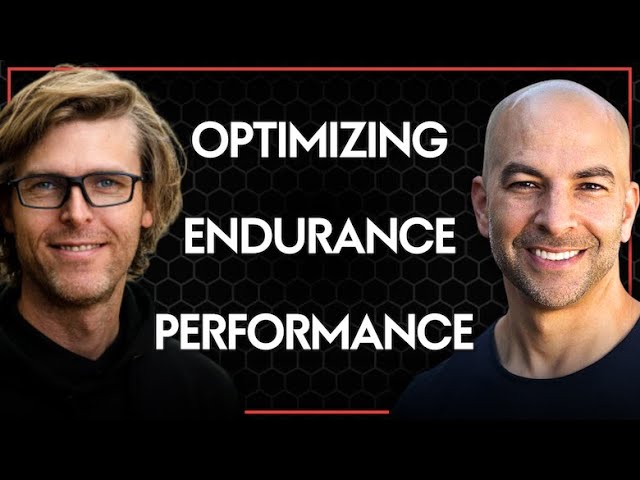 Watch the conversation
Peter Attia — The Drive, episode #331 (Olav Aleksander Bu, part 2).
What's inside
A few things covered in the video
- The energy systems run continuously, together — not like three engines switching on one after another. At every moment they all contribute; what changes with effort is their relative share.
- Lactate is a powerful tool for understanding our energy metabolism: what we measure isn't a raw figure but an integrated picture — a dynamic balance between its production, its passage from muscle into the blood, its distribution, and its fate in the tissues: used as fuel (oxidised to release energy) or converted back into glucose by the liver (the "recycling", or Cori cycle). (we develop this point in our article on lactate timing.)
- How much lactate the muscles actually produce cannot be measured. There's no way to observe it directly — you need models to estimate it from what can be measured. (it's exactly the kind of information we're building with the development of our athlete's digital twin.)
- Peter Attia and Olav Aleksander Bu add nuance to metrics that are often poorly defined and dismantle a few stubborn beliefs — FTP, Critical Power, MLSS, LT1/LT2, VO2max… Each says something, but none is enough on its own — and none means anything without a rigorous measurement protocol.
- A telling ballpark figure: in elite marathon runners, oxygen consumption at the maximal lactate steady state (MLSS) sits around 95% of VO2max — and his own athletes, Kristian Blummenfelt and Gustav Iden, are in that same territory.
- The numbers depend on the protocol and the environment: lactate thresholds are very sensitive to both; VO2max less so, but not entirely immune. Hence the value of testing under controlled, repeatable conditions.
- Standardise the test — and what comes before it. Not just the day's protocol: the days beforehand matter too (nutrition, hydration, sleep, training) — and how you manage training before the test depends on each person's level and individual characteristics. Time of day matters too (circadian rhythm weighs heavily). Without standardisation, you can't compare.
- Lactate is highly sensitive to context: hydration, altitude, temperature… hence the importance of measuring properly and interpreting well.
A dense but accessible conversation that hands you the right lenses. Thanks to Peter Attia and Olav Aleksander Bu for the quality of the exchange.
Source: Peter Attia — The Drive, episode #331 · episode notes